

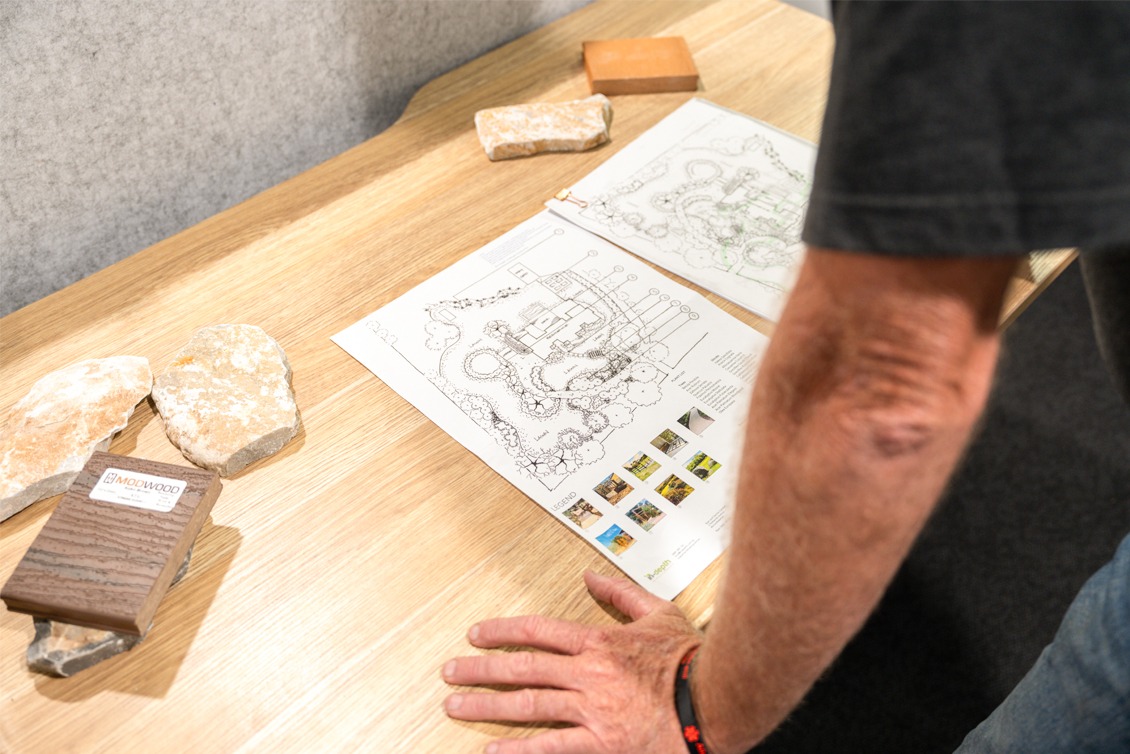
Exceptional landscapes are never accidental. They are shaped through careful planning, architectural thinking and a deep understanding of place. In Canberra, where climate, orientation and block conditions vary significantly, landscape design must respond intelligently to its environment.
A considered architectural approach ensures your outdoor space feels cohesive with the home, performs in all seasons and evolves beautifully over time.
Designing for Canberra’s distinct character
Canberra’s residential landscape is diverse.
From the established, tree-lined avenues of the south and inner suburbs to the newer, open-sky estates of the north, each precinct carries its own spatial qualities and microclimate.
Mature suburbs often offer generous blocks, established canopy and layered streetscapes. Design in these areas requires sensitivity – integrating new structure with existing trees, filtered light and neighbourhood character.
In newer estates, where blocks may be more compact and exposure more pronounced, landscape architecture often focuses on privacy, structured screening, shade creation and refined spatial efficiency.
Corner blocks and homes positioned on roundabouts require particular consideration. These properties are visually prominent. Design must balance presence with privacy, using structured planting, architectural walls and layered landscaping to create both discretion and street appeal.
Thoughtful landscape design in Canberra is never generic. It is contextual.
Architecture before aesthetics
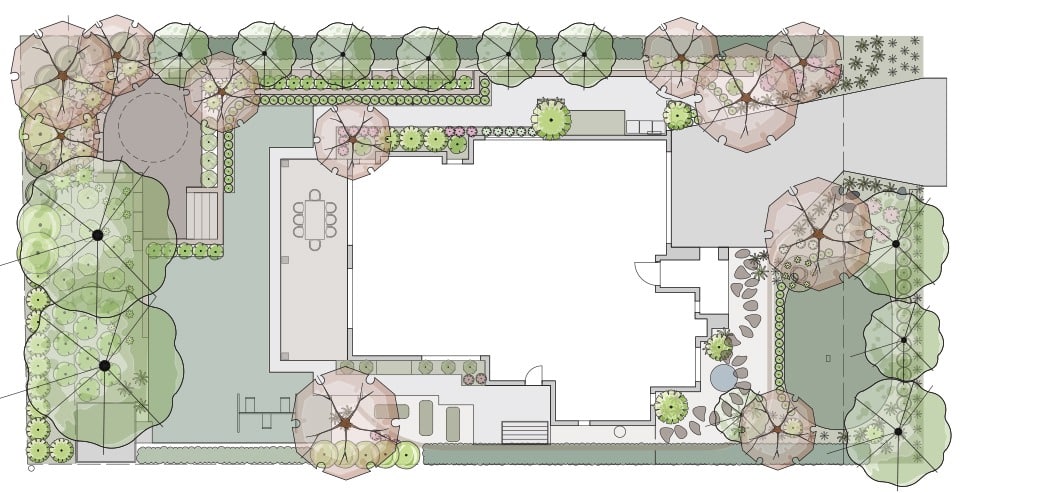
True landscape design begins with structure.
This includes:
- Accurate site levels and finished floor alignment
- Engineered retaining and structural elements
- Stormwater management integrated into design
- Spatial zoning and movement through the landscape
- Orientation to sun, wind and seasonal change
In Canberra’s clay-based soils, drainage planning is fundamental. Subsurface water pressure and seasonal expansion must be anticipated early. Structural integrity is what allows the finished landscape to remain timeless rather than temporary.
Once this framework is resolved, materials and planting are selected to complement it.
The influence of orientation and seasonality
Canberra’s climate demands deliberate positioning.
North-facing entertaining zones capture valuable winter sunlight. Western exposures require strategic shading to mitigate summer heat. Wind corridors, particularly in elevated or open estates, should be softened through considered planting and architectural screening.
Designing with orientation in mind enhances comfort, extends seasonal usability and protects long-term material performance.
Spatial planning for lifestyle
High-quality landscape design reflects how a property is lived in.
Larger blocks may accommodate distinct zones – entertaining terraces, quiet garden retreats, pool environments and open lawn areas – each carefully positioned and proportioned.
On more compact sites, design precision becomes paramount. Every element must justify its presence, ensuring scale, circulation and visual flow remain refined.
A landscape should feel effortless. Achieving that effortlessness requires meticulous planning.
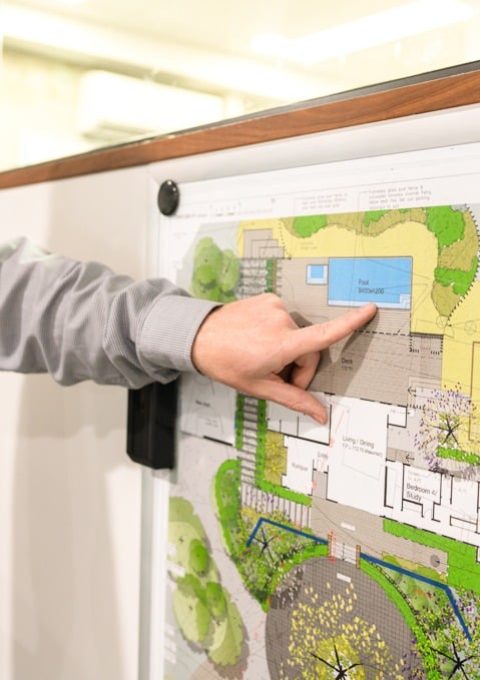
Integrating pools as architectural centrepieces
In premium residential projects, a pool is rarely just a recreational addition. It becomes a defining architectural feature.
Successful pool integration considers excavation logistics, soil conditions, setbacks, structural engineering, sun orientation and prevailing winds long before construction begins.
Equally important is the relationship between water, hardscape and surrounding structure. Coping detail, expansion allowances, surface transitions and drainage gradients must be resolved cohesively.
In Canberra’s climate, wind buffering and solar orientation influence comfort and energy efficiency. Surrounding materials must withstand freeze–thaw cycles without compromising aesthetic quality.
When thoughtfully integrated, a pool anchors the landscape – visually and experientially.
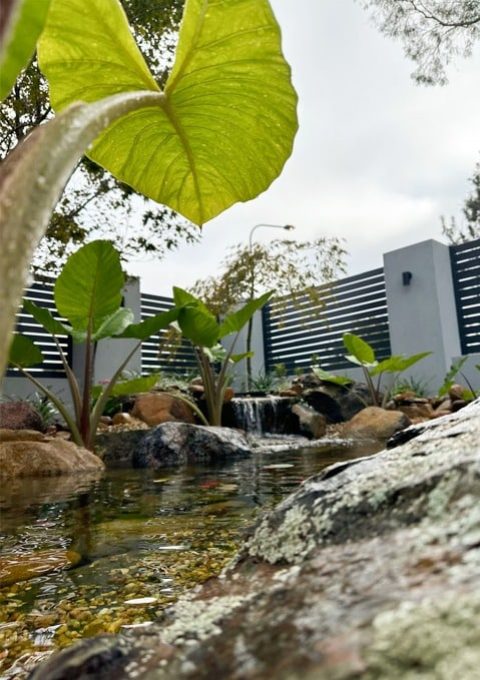
Aquascaping and curated water gardens
For clients seeking something more intimate and contemplative, aquascaping offers a distinctive alternative.
A well-designed ecosystem pond introduces movement, reflection and sound into the garden. Unlike ornamental fountains, aquascapes are designed as balanced systems – incorporating aquatic planting, biological filtration and carefully selected fish species to create a self-sustaining environment.
In Canberra, depth planning is essential to stabilise temperature during colder months. Partial shade assists in regulating algae growth during summer. Filtration systems are discreetly integrated to maintain clarity without visual intrusion.
These water gardens offer more than aesthetics. They create a daily moment of stillness – a place to pause, observe and reconnect.
For many homeowners, this becomes one of the most valued spaces within the property.
Material selection with longevity in mind
Materiality should feel deliberate and enduring.
Frost-resistant porcelain, sealed natural stone, architectural concrete and high-quality composite decking are frequently selected for their resilience in Canberra’s temperature extremes.
Highly porous materials that deteriorate under freeze–thaw conditions are best avoided. In premium landscapes, durability is inseparable from refinement.
Planting as structure, not decoration
Planting in high-end landscape design is never incidental.
In newer estates, layered planting can establish privacy and canopy over time. In established suburbs, plant selection must respect and enhance existing mature trees.
Frost tolerance, drought resilience and long-term scale are fundamental considerations. The objective is to create a landscape that matures gracefully rather than overwhelms its setting.
Common design oversights
Even in substantial projects, certain oversights can undermine outcomes:
- Underestimating the importance of drainage
- Failing to align levels accurately with the dwelling
- Introducing structural elements without engineering rigour
- Positioning pools without full consideration of orientation
- Treating water features as decorative rather than integrated systems
Detail matters. The longevity of a landscape depends on decisions made before ground is broken.
Investment and value
Premium landscape projects are inherently site-specific.
Structural works, pool construction and water features represent significant architectural components. Early design clarity protects both budget and programme by reducing variation during construction.
A thoughtfully executed landscape enhances not only daily living but also long-term property value.
A landscape that endures
Landscape design in Canberra benefits from a disciplined architectural mindset — one that responds to orientation, microclimate, block typology and lifestyle.
When structure, materials, planting and water elements are conceived together, the result is not simply an outdoor area, but a composed extension of the home.
Done well, it becomes a private environment – curated, enduring and deeply personal.
If you are considering a landscape transformation or architectural outdoor project, we welcome a confidential conversation. Our team works closely with discerning homeowners across Canberra to design landscapes that are thoughtful, enduring and deeply personal.